 21tv US
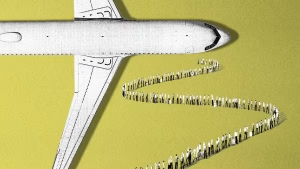
Partial Government Shutdown Wreaks Havoc on U.S. Airports as TSA Staffing Crisis Deepens During Spring Break Travel Rush
A partial government shutdown that has restricted funding to the Department of Homeland Security (DHS) has triggered widespread chaos at airports nationwide, dramatically worsening security lines during one of the busiest spring break travel seasons in recent years.
The shutdown began on February 14, 2026, after Senate Democrats and Republicans failed to reach an agreement on funding for the Department of Homeland Security, particularly over disputes involving Immigration and Customs Enforcement (ICE). While most DHS operations continue with essential personnel working without pay, the funding lapse has hit the Transportation Security Administration (TSA) particularly hard.
TSA employees, including thousands of airport security screeners, are legally required to report to work but will not receive paychecks until Congress restores funding. Union leaders report that many officers are calling out or resigning, citing financial hardships such as inability to afford gas for their commute or child care. As a result, understaffed checkpoints have led to unpredictable and excessively long TSA lines, causing travelers to miss flights and turning routine airport experiences into major ordeals.
Officials warn that even if the shutdown ends soon, it could take days or even weeks for the TSA to return to full staffing levels due to the high number of absences and resignations. Reports indicate that hundreds of TSA officers have already quit nationwide since the shutdown began.
Key Milestones of the Shutdown’s Impact
February 14, 2026 The partial government shutdown begins due to a deadlock between Senate Democrats and Republicans over funding for Immigration and Customs Enforcement (ICE), an agency under the DHS.
February 22, 2026 The Department of Homeland Security initially announces the suspension of both Global Entry and TSA PreCheck programs to conserve resources. However, the TSA PreCheck suspension is quickly reversed hours later. TSA also suspends courtesy escorts for members of Congress at airports, citing the added strain on officers. Some airports continued limited escorts through non-DHS entities.
February 27, 2026 TSA workers receive only a partial paycheck covering the second week of February, as full funding for the agency lapsed on February 14. This marks the beginning of financial strain for essential workers.
March 5, 2026 President Donald Trump fires Department of Homeland Security Secretary Kristi Noem amid growing frustrations from White House officials and GOP lawmakers. Noem had overseen key agencies including TSA, the Coast Guard, ICE, and FEMA during the shutdown. Trump later nominated Oklahoma Sen. Markwayne Mullin as her replacement, with the change expected around March 31.
March 9, 2026 Security lines at Houston’s William P. Hobby Airport balloon to more than three hours due to severe TSA staffing shortages. Airport officials advise travelers to arrive four to five hours early for flights to avoid missing them.
Roughly three weeks into the shutdown, passengers face hours-long security lines at major airports including Houston’s Hobby Airport, Hartsfield-Jackson Atlanta International Airport, and Louis Armstrong New Orleans International Airport. At some locations, more than half of scheduled TSA officers have been absent.
As the shutdown drags into its sixth week, travelers continue to bear the brunt of the crisis, with spring break crowds exacerbating the delays. Union officials and airport authorities have urged Congress to resolve the funding impasse quickly, warning that prolonged understaffing could lead to even more severe disruptions, including potential temporary closures at smaller airports.
The situation remains fluid, with ongoing negotiations in Congress and no immediate resolution in sight as lawmakers observe a recess. Passengers are being advised to check real-time TSA wait times and build in extra buffer time for travel.